Showing posts with label Adirondack Cottage on the Lake. Show all posts

Tuesday, September 24, 2019

Energy Conservation Construction Code

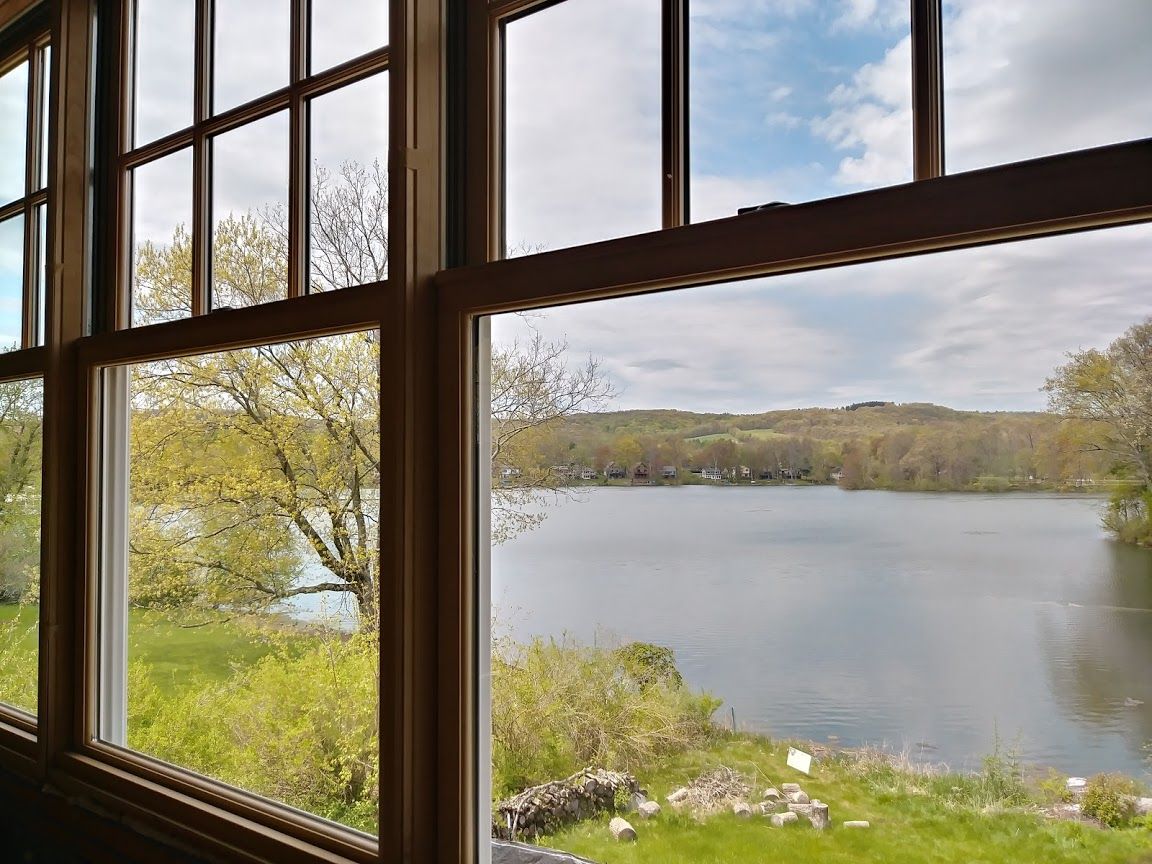
Lake Side View
The project I called "The Adirondack Cottage on the Lake" is ready for move in day. I'll include some photos of it here, but what I want to write about is the Energy Code and the Blower Door Test. This house scored a 1.05 ACH (Code requires 3 or less - this was an awesome performance!)

This house was built to the same specifications as all the new construction I've designed for the last 5 or 6 years, even before our current stringent energy code took effect. The energy code is designed by "Climate Zone" and in Dutchess and Columbia County in NYS, we are considered Zone 5. (Ulster County is Zone 6, and requires higher R-values)

Great Room Fireplace

Barn Wood Accent Wall separates Kitchen Area
There are various ways to meet the code, but as long as your building does not have glazing area exceeding 15% of the gross exterior wall area, following the Prescriptive requirements is the easiest way to go and I have come up with a system that works well. It exceeds the code requirements for insulation, receives flying colors on the blower door test, which tests for air infiltration, performs well in regards to vapor transmission, dew point, and moisture, and is relatively fool-proof to construct and inexpensive to build.

Framing and Installing the exterior continuous INSULATED sheathing
I started using continuous wall insulation in addition to the wall stud/cavity insulation so long ago I had to explain it to every builder I worked with. The easiest method is to use an integral structural insulated sheathing, like Zip-R. Click here to see my previous post about CI and Zip-R: cwb-architect.blogspot.com/2013/sheathing-ci

For our climate zone, what works is using 1" of exterior continuous foam insulation over 2x4 studs with Rockwool Batt in the cavities. I've had guys tell me they felt like they were back in the 1970s by using 2x4s instead of 2x6s, for the wall studs, as well as worry that the building will not be "stout" or "strong". Fear not! 2x4s are strong enough to be the framing of our walls. Fun Fact: 2x6s were only used to "fit more insulation" - but what we now know from Building Science teaches us about the value of using a continuous layer of insulation and air-barrier and the major weaknesses- like thermal bridging- of relying on cavity insulation alone. So! What's old is new again, and we frame our walls with 2x4 studs.
Rockwool Cavity Insulation in walls
Closed cell spray foam in an energy intensive product, so we use it only where we need it- the rim joists at the floor lines and, if we are conditioning the attic space, directly applied to the underside of the roof deck. This un-vented roof system works especially well for 1 1/2 story type designs, like this house, because the second floor rooms are really in the roof. Conditioning the attic can make sense in other instances too, like if there is mechanical ductwork up there. (Fun Fact: The Energy Code requires all ductwork to be sealed, but only ductwork located in un-conditioned spaces needs to be insulated.)
Foyer Entry- Catwalk Overlook into Great Room
Caulking and low density foam get used liberally at all joints and penetrations, including around all windows. I try to talk client's out of using skylights, as they are a big hole in the roof top insulation. I have detailed crawlspace walls to be insulated in various ways, depending on the site and future use of the space. And if I could, I'd use triple paned windows - but most budgets lead us to good, low E glazed double paned window units.

The mechanical systems REALLY need to be looked at closely to not be over-designed. We are so close to Passive House standard (.6 ACH) and if we can do just a bit more to seal our building envelope to acheive that # at our blower door test, then it's a whole new ball game - using super small and efficient heating/cooling systems for super air-tight spaces!

Spray Foam insulation makes an air-tight and quiet building

Thursday, May 9, 2019

Chapter 4: Adirondack Lake Cottage - Siding, Trim, & Insulation

Beautiful Day at the Adirondack Cottage on the Lake
At the beautiful lake-side property for the "Adirondack Cottage" project, spring has sprung. The lake is no longer frozen, the winter winds have gone away till next year, and the trees have budded out their leaves- including the maple tree we saved with our site planning (see Chapter 1 link below). We protected it's roots from heavy machinery by marking around it off limits to vehicles, and so far so good- it looks healthy!

Sheetrock being delivered in the front door (and leafed out tree in front yard!)
While it may look complex, the roof is a basic gable for the main part of the house, with dormers popping out of the roof (2 front, 1 back) to create space for the second floor bedrooms and windows up high in the entry foyer. The garage has it's own rotated roof, as does the great room bump out with the soaring feature window. The main roof slopes down in front to cover the front porch roof - with a gable detail over the entry- and slopes down over the back master bedroom glass doors, supported by some brackets to add a special detail at the location of the private patio.

Master Bedroom end of the house roof extension over glass door

View from inside the Master Bedroom, which will have it's own private patio
Inside the electricians and plumbers have installed their rough wiring, piping and duct-work and the fixtures and compressors and some cabinetry is on site. The cavities have all been insulated with mineral wool batts in the walls, and closed cell spray foam in the roofs. The attached garage has been thermally isolated and fire separated from the house. In addition to the cavity being insulated, the walls also have taped continuous insulated sheathing to help create a tight envelope that allows very little air infiltration. (We will find out how little on blower door test day!) This continuous insulation is so important when you see places, like near doors as in the photo above, that have multiple wood studs (meaning no cavity for insulation).

Cathedral-like view as one enters the front door

Front Bedroom- looks toward saved tree
In keeping with the traditional "cottage" style, most of the windows used here are traditional double hung style units. We elected for what they call "cottage style" divided lite patterns, which means the top sash only got divided into 6 smaller "lites"- all the better for seeing the view out the clear, bottom sash. Of course there are exceptions: the windows in the front bedroom could not meet the egress requirement as double hung units and so I specified casements there (see it open in the photo above?) with a simulated check rail and divided lite pattern similar to the double hung units used throughout the rest of the house, so they blend in. The windows that create the feature in the high gable wall in the Great Room have no divided lites, so the view is less obscured.

Back Bedroom windows look toward water
Great Room with lots of height and windows accentuating the lake view
Outside the exterior trim and shingle-style siding was being installed. These are some of the important details that lend the home the moniker "Adirondack Cottage". The shingle style siding in a warm green color (Certainteed brand "Spruce" Cedar Shake Style Siding) and helps lend an air of authentic, highly detailed natural cedar shake, while being "maintenance free" vinyl. This "shingle" infills around the windows and doors on most of the exterior walls, abutting the white edge trim. I detailed places with special trim and brackets, to call attention to the architecture at important places like the front porch, roof gables, and glass doors leading toward the lake. Especially note the traditional gable "crows foot" detail. These special touches, along with the one-and-a-half story building massing and the stone base details soon to come were all selected to reinforce the Adirondack feeling the clients wanted.

Glass Doors with Transom window above from Great Room
Pair of Glass Doors from Dining Room to Deck

Siding and Trim and Details, oh my!

Wait until the interior trim work is installed and stained and you see how cozy that makes the inside spaces! Until next time...

To read the previous post on this project click on the links below:

cwb-architect.blogspot.com/chapter3-adirondackcottageonlake
cwb-architect.blogspot.com/chapter2-adirondackcottageonlake
cwb-architect.blogspot.com/chapter1-adirondackcottageonlake

Friday, March 29, 2019

Chapter 3: Adirondack Cottage on the Lake Framing, Porches, Roofing

Adirondack Lake Cottage - view from across the lake

Great Room feature window bump out on toward lake
The Adirondack Cottage on the Lake I designed is now enclosed from the weather. The roof is on, the walls have their insulated sheathing and windows installed, and some temporary doors are installed. Porch and deck floors have been framed and one can really see the entire massing of the building and get the feeling for all the rooms - interior and exterior. It looks and feels fantastic!

I am pleased by how connected each room feels to the lake in particular, and the outdoors in general and how the balcony bridge and soaring feature window really make the interior unique the moment you step through the front door. My layout of windows, glass doors, transoms, and outdoor decks/porches, as well as the placement on the site, really maximized this water-front property. The house totally takes advantage of it's location.

View from Great Room back toward Kitchen and Balcony above
  Other than the master bedroom suite tucked to one side of the floor plan behind the fireplace, most of the first floor area is open. The great room is the focus with many, many windows reaching upward toward the roof, and fireplace, and a high ceiling with a balcony looking over into it. The kitchen and dining spaces are in view, and a first floor office/bedroom is also very visible, with glass French doors as it's entry.

Glass doors in Dining Room to the deck
Bridge Balcony 
The second floor rooms and balcony are tucked up into the roof. This helped the massing of the home fit in with its petite neighbors a bit better. Windows pop up in dormers from the roof and the bridge balcony allows one to be high up with views down into the foyer, the great room, and out the many lake side windows toward the water.
Front Porch - dormers above (temporary door)

View from Bridge Balcony down into Entry Foyer

Lake Side Elevation
Front/ Street view with protected existing tree

Glass doors/windows in Master Bedroom have small roof overhang

To read the previous post on this project click on the link below:
cwb-architect.blogspot.com/chapter2-adirondackcottageonlake

Wednesday, February 27, 2019

Chapter 2: Adirondack Cottage on the Lake Site Planning

View of New Adirondack Cottage on the Lake
Doing a site analysis and the subsequent site specific design that an architect can bring to a project is showcased in this design. The client had lake side property, with a gutted 1950s ranch home on it, and wanted to create a contemporary Adirondack style cottage where they could enjoy the lake year round, and into their retirement.

BEFORE: View from Street Side
BEFORE: View from Lake Side
The existing house on the property was very small and in a state of incomplete interior renovation. It was located very close (only 3') from the NE side property line and the rooms didn't take advantage of the lake views as one would hope. It had a front-loading 2 car garage about the same size as the house. It was determined early on that the engineering to change what was there into what the clients wanted was going to cost more than building new. It was the location, on the side of a peaceful lake, that was the important thing, so we set out to create a new design that took advantage of that.

Site Plan for Adirondack Cottage on the Lake
The town planning and zoning boards were happy to see our proposal to center the new home on the width of the property. With special permissions from The Department of Environmental Conservation and the Zoning Board of Appeals, we kept the construction footprint a bit closer to the back-lake side than was standard, so that an established tree in the front yard could stay. The clients wanted to keep an attached garage, and one of the "Aha" moments came when I suggested rotating the garage entry to the side, instead of having the doors face the front, so the house could look more traditional by "hiding" the garage. For other posts about how architects deal with the unsightliness and impossibly large massing of a garage near the house, click HERE and HERE.

Lake Side with Door to Recreation Room below Living Room
The grade slopes down from the street to the lake with enough vertical change that a the Recreation Room in the cellar can have nice windows and a door out the back, and the cars can drive into the attached garage from the front. This large change in elevation can make the living levels - which are at the level of the street- feel an unfortunate separation from the lake because they are at a a much higher elevation.

The new design works to mitigate this separateness with some re-grading with retaining walls to create a usable level area at the base of a large deck accessed off the Dining and Living Rooms. The choice of a "One and a Half Story" cottage style, in which the second floor is located within the roof space and dormers provide the window space, also serves to minimize the height of the structure. This type of massing also provides for a greater square footage on the ground level, and less upstairs, which works perfectly for the client's wish for a ground-level Master Bedroom Suite. The new Living Room, open to the Entry, Kitchen,  and Dining is to be a soaring high space with a balcony above and many, many windows toward the lake view.

There are always trade-offs, and unfortunately one large tree that was close to the back wall of the former structure did have to be removed . But amazingly, the sewage treatment system (aka septic leach field area) was able to fit outside of the 100' wet lands buffer established around the lake, and this new system will be a major improvement in terms of the health of the lake.

View from Street

Click here to see the previous post about this project:
cwb-architect.blog/adirondack-cottage-on-lake-1

Friday, February 8, 2019

Adirondack Cottage on the Lake: Part 1

(Frozen) Lake View from Property
Let's call this project 'Adirondack Cottage on the Lake'. Construction began this winter after demolition of the existing 50s ranch home on the property. In future posts, I'll discuss the design- a refined Adirondack style featuring wood beams, stone details, and shingle siding that focuses toward the lake with a special glass feature in the double-height living room. We'll also get into how we decided to lay out the different indoor and outdoor "rooms" in relation to each other and the site, as well as the environmental review process, and the decisions that were made to remove the existing home from the property and start fresh and how the town was glad we did.

But for now let's just look at COLD weather, blue sky photos of the crew beginning to form the basic shape of this new one-and-a-half-story home aside the frozen lake.

Foundation and First Floor Framing - View from Lake

Foundation and First Floor Framing -View from Street
First Floor Exterior Wall Studs in Place (tree in front yard saved!)

Wall Sheathing and 2nd Floor Walls
Roof Rafters and Beams
Now that they are beginning to construct roofs, it will start looking more like the drawings soon...