Showing posts with label mechanicals. Show all posts

Friday, October 5, 2018

Modern Farmhouse- Mechanicals & Roofing

Metal Roofing, Fascias, and Drip Edge being installed

Work continues at the New House After a Fire. Roof installation is underway along with the white fascia boards and drip edge all around the edge of the roof plane. (see the coils of metal?) The back deck - which is expansively large and accessed by 3 doors in 3 rooms - has been built, along with its railing and stair. The balconies have their decking, but don't yet have their railing. Check out the fantastic mountain view and you can see why we have these outdoor spaces.

Deck with mountain view

Balcony off back bedrooms toward view

Inside, the plumbers and electricians have been busy installing wiring, supply and drain pipes, and duct work for heating and cooling. Not pretty stuff, but we can all agree, super valuable! Some photos of their work before it all gets covered up by wall board:

Supply and Return Air Ducts and Boxes/Wiring

Bathroom Water Piping: Red/hot & Blue/cold Supply and White Drains

Air Sealing (Orange Spray Foam) around all holes

Framing for Fireplace & Hearth with Blocking for TV above


Friday, May 19, 2017

Blower Door Test at NHND to the Pond


This week the HERS rater conducted the blower door test on the New House Next Door to the Pond. This tests the air-tightness of the building envelope and measures the number of air changes per hour and is now required for all new construction in NYS. The NHND to the Pond scored a respectable 49 HERS Index rating and 1350cfm50 during the test.

Older homes, built before building wraps or board sheathing or wall board or spray foam insulation can be very porous in terms of outside, un-conditioned air getting in and inside conditioned (heated or cooled) air escaping out. You might think of this as a "drafty" or "leaky" building. And that was the "norm" for many years in construction.

Nowadays we try to decrease our usage of energy and minimize our impact on the environment (or minimize our financial costs - different impetus for different folks, for sure...) and the newest IECC (International Energy Conservation Code) has forced all but historic buildings to meet more stringent insulation and air-tightness standards so they will use less energy to be heated and cooled.

I've always designed my projects to be "green" and while I haven't sought certification by LEED (Leadership in Energy & Environmental Design) or Energy Star, I have always detailed my buildings to be as environmentally friendly as construction can be, sometimes teaching the contractor or inspector about construction details I've learned about in building science classes.  Being "green" usually means creating the best "building envelope" (line separating inside from outside) we can to keep the building's energy usage down to a minimum. (Rather than all the myriad of other "green" ideas, like Forest Stewardship Certified lumber, or reusing materials from deconstructed buildings, or considering the embodied energy of materials/products we build with, or specifying low water-usage fixtures or low-wattage lighting/appliances, or thinking about other sustainable materials, like wool or cotton insulation batting, etc.)

CI layer visible just outside of framing

Recently that's included continuous insulation.  And often the use of spray foam insulation at key trick spots, like the rim joist. Slab edge insulation and the best windows you can afford all help, along with a lot of insulation in the roof/attic. Click here to see an older post about insulation: 2014/02/insulation-phase-1

HRV (on the right) takes heat out of the air before expelling it out of building

When you start getting a super tight building envelope, you need to introduce mechanical ventilation to ensure healthy indoor air. It may seem counter-intuitive (why not just let the building breath???) but the science shows that tight buildings with (continuous running, even) mechanical ventilation systems use less energy. Click here to read an older post about Heat Recovery Ventilators (HRVs) http://cwb-architect.blogspot.com/2014/06/air.html

Insulated Cellar Access
Whoops! Not quite finished yet!


During the test and other check-point inspections potential problem areas were discovered and some were remediated.  The cellar door access was basically a hole in the building envelope, so an insulated interior stud wall was constructed for the insulated, weather-striped door to be installed into. Also it was found that the continuous insulation and finish specified under the cantilevered floor areas was never installed. When that is complete, our numbers might be even better!

Here is the bright & colorful HERS Index graphic:


Monday, November 21, 2016

Updating a Family Room

New Windows on Front Elevation
 
New Tall Windows on Back Elevation


This is the same house the "Modern, Open Plan Updates Historic Home" blog post is about. (click here to read it)

This Historic Federal-style Colonial had been flanked in the 1970s by a two-car garage at one end and a large family room with open-truss ceiling on the other. Of course these spaces added to the modern usefulness for any folks living there but these additions, while sort of symmetrical in their massing at least, were not sympathetic to the historic nature of the existing home. The windows were small and high in the back, with a large bow window in the front. The family room had a very dated style and the open trusses were designed with a heavy bottom chord that, due to the step down from the main floor level, was low enough to feel like you might hit your head as you left the kitchen and just made the room feel oppressively low for such a large space.

Renovated Family Room

The pluses were that this family room was large area-wise, with glass on three sides, and connected to the deck and pool with a sliding glass door at one end and the kitchen on the other end. We changed the front and back windows to let in more light, allow views of the beautiful property due to their lower sill height, and have more historically accurate proportions/placement on the wall.

We re-configured the truss to raise the height of the space below the structure and make the room feel larger, higher, and more contemporary. We removed the horizontal band of chair-rail/wainscot that further divided the walls and accentuated the long/low feeling of the room as well as the horizontal heavy beam along the top of the walls. We added new mechanical systems for heat and A/C, allowing the inefficient, dented baseboard radiators to be removed. In addition a new efficient (red!) wood stove insert was installed, bold paint color covered the walls, and engineered wood flooring replaced the water-damaged particle board.

Renovated Family Room- 3 Windows replace Bow Unit

Now the room is a family friendly, sunny, and comfortable lounging space with a vaulted/high open truss ceiling. It is accessed off the kitchen and the office by just a few steps. The space in the main section of the house that was a living room was taken over to be a mud room by the entry/garage and a larger dining room. (read previous post to see more on that). Once the clients decided they didn't need or want a separate formal living room and family room, they were freed up to explore what became the solutions you see here and this room is so large, that it can be arranged into activity zones and meet many needs/purposes for the family.

Family Room- Looking toward Kitchen/Main House

Ultimately the new residents are doing the latest update to a rural colonial that has housed many families for over the past century by being added to and modified throughout the decades. This most modern iteration is vibrant and classy without being too tied to history. It allows for all aspects of the family activities- from mud boots and backpack storage, to working from home and homework project space, to hosting dinner parties, to relaxing with a movie or a fire or even a game of billiards. (notice the pool table stayed!) Like we tend to do in current designs, rooms were opened up to each other, lots of light was invited into the space, and storage space was given more of a priority. In addition, poor circulation layout was re-designed -as in the garage door moving out of the dining room and into a new mud room area by the front door- and the powder room access being changed so that flow was better connecting the family room to the rest of the house. Lastly, updated finishes and mechanical systems changed the look and, literally, the feel (temperature) of the space.

Before - Front of Home w/ Garage and Family Room Wings on each side
Before- Back Elevation of Family Room Section
Before - back half of room was dark with small, high windows and wood paneling

Before- Heavy Bottom Chord of Trusses effectively lowered the ceiling height

Tuesday, June 21, 2016

Progress on Site Work and Foundation at NHND to the Pond

When you build in an established developed area, like a village, there could be municipal services that your new building can hook up to, like water supply and sewage treatment. There are enormous benefits to shared services such as these, and that's why the LEED (Leadership in Energy and Environmental Design) standards value selecting a building site in an already-developed area so highly. (Site selection can also help one minimize their transportation footprint - which this family is great at, biking to work/school/town)

This rural site doesn't have any municipal services to offer.  So the owners here have to install their own services. Here are more photos of dirt, but essential if you want to have indoor plumbing!


Temporary construction "road" to SDS area of site (follows existing carriage lane)

Raised Leach Field

Well!
House Footings
In addition the the well and septic, the footings for the house were poured. The house is placed on the site such that part of the foundation will be exposed out of the hill sloping down to the pond, so the footing needed to step down as well. In our climate zone, footings need to bear on undisturbed earth minimum 42" below grade. (or be re-bar tied into bedrock) This is to ensure they are on soil that won't freeze and heave, which would rack/move the building un-evenly, like a annual winter earthquake! Footings and leach fields may not be interesting or glamorous, (no pics like these on Houzz!) but they are probably one of the most important parts of making a rural home safe, solid, and comfortable to live in for many generations.


Tall Forms used (right side) where footing steps down hill

Friday, May 6, 2016

Before and After - Village Home Renewal


Repeated Square Windows bring order to the elevations
Side/Front - Before

This was an interesting renovation project I worked on a few years ago. Located on a corner lot in a village, this interesting older house was in a state of half-completed projects, that a DIY-er had begun decades ago, but never completed. The un-finished second floor attic space became two new finished bedrooms with closets. Insulation and ductless A/C was installed to keep those difficult to moderate rooms-in-the-roof comfortable.

 New Porch, Windows, and Air Conditioning

Side (from back) - Before
Before - Odd window shapes/ no order to window layout
 Street Side - Before (note strange looong overhang of roof to right that was hidden with addition of storage shed next to back door and screened porch


Back with new Screened-In Porch

Back - Before
The 1970s long, low "side wing" additions were given new repeated square windows to bring some order to the exterior elevations and to make neat light/air punches over the kitchen counter and in the bathroom/laundry room. The free-standing shade pergola was moved to the back yard and a new front porch was constructed to protect the front door and announce it as the main entry. A new red metal roof unified the entire house. A new screened porch and enclosed outside storage area was designed to hide/fix a strange blank wall and asymmetrical shed roof over the glass doors to the back yard and also helped to define the back of this exposed corner lot as more a more private space for the new owners to enjoy.

Friday, January 15, 2016

Modern Farmhouse tranformation almost complete

Over the past few months I've been showing you pictures of a substantial renovation and addition project I've been fortunate to work on this year. This is the 6th post showing this project.

See older posts by clicking links here: #1; #2; #3; #4; #5

Well, it's almost all done, and looks great. The exterior is finished, including metal roofs over porches, exterior light fixtures and new evergreen painted doors installed.

The interior has the finished floors, plumbing fixtures, lighting, and cabinetry, and some counter tops installed. Below you can see some of these materials.

The painters are applying final coats of paint and stain. The mechanical installers are finalizing the heating and cooling systems. The carpenters are installing closet clothes rods and will soon be installing door hardware. Decorative tiles are being installed above the cook-top.

From my perspective, it's been a a relatively short time for such an all-encompassing transformation. Sometimes sitting at my desk, drawing ideas seems so far away from the job site where it actually happens, that I forget! And when I get to pop in for a site, I love seeing it all come together- seeing if the spaces look and feel like I thought they would when I dreamed it up all those months ago, and what colors my clients chose. Kudos to all who contributed to this beauty- owners, GC, and subs!

The Gallery - taken standing in Kitchen looking toward Family Room

Kitchen cabinets and counter tops
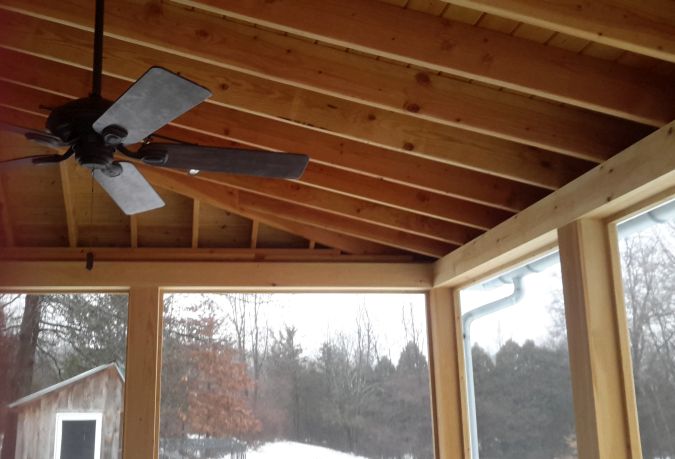
Natural wood interior at Screened Porch space
Stair that connects Rec Room to Family Room


Tile & Seat in Shower
Vaulted Board Ceiling in Master Bedroom

Thursday, August 6, 2015

From Tractor Garage to Office

Working on a discrete, separate out-building often makes for a fun project.

The costs can be lower, because of the smaller size. There are no strict rules to be followed to match the rest of the existing house or any particular style, necessarily. Clients often feel they can take more chances/risks and sometimes choose to do some funky or trendy finishes, that they might not be bold enough to do in their house.

This project is an old tractor storage barn. It is attached to another barn-type space that is near a pool, and has been renovated into a rough bathroom/changing room/pool house.

Tractor Garage  - Before
Pool House - Before

The bones of the building will remain as is: the foundation, the exterior walls and roof, the wood siding. New energy-star windows and doors have been installed to take the place of the existing over-head door. The walls and roof are insulated with spray foam. The dirt floor of the tractor garage now has rigid insulation and radiant heat tubes laid into a new concrete floor. What was a gravel floored, un-heated garage will become a new home office.


The pool house is being renovated with a new layout boasting beautiful new bathroom and laundry room inside and some sprucing up on the outside porch space. All new flooring, bead board walls, and paint- plus removing that indoor/outdoor plastic carpet- will go a long way to cleaning up this part of the building.

The whole structure will benefit from all new electrical wiring and plumbing and heating/air-conditioning. We have moved the pool mechanicals out of the building to ensure the office is a quiet place to work. We have kept the ceiling high in the new office and installed large windows facing toward the pastoral views. We have connected the office to the new bathroom so it can also function as a guest house.

Here are some photos of the work in progress: