Showing posts with label sustainability. Show all posts

Monday, April 13, 2020

Renovating for Accessibility & Efficiency

Tub, Vanity Cab, Tile was removed
New Curb-less Shower, Open & accessible
This ranch house was purchased by a couple in order to age in place and some immediate renovations were implemented for accessibility and energy efficiency. The existing slab-on-grade construction already had the perfect "no steps to get inside the door" feature that my client's needed, and this was true whether one came in from the front door/driveway or the attached garage. What didn't work was that some of the passageways were too narrow, the metal-framed sliding glass doors and heating system were old and in-efficient, and the bathrooms needed grab bars and fixtures that allowed for wheelchair access.


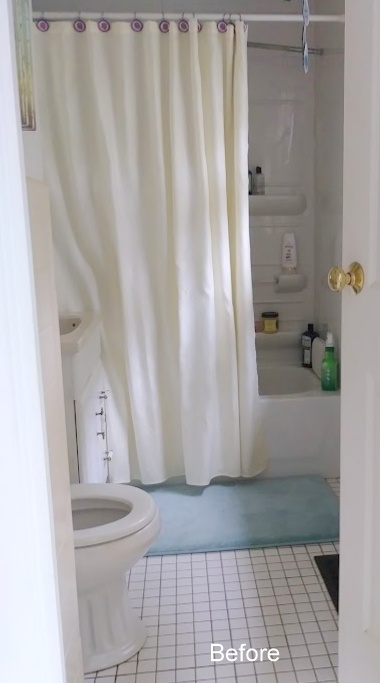
Bathrooms were gutted of all fixtures and finishes and a foot was stolen from the dining room (you can't even notice!) to allow space for a roll-in curb-less shower with a linear drain, niches, grab bars, a hand-held shower wand, and space for a bench seat in the master bathroom.  An ADA compliant toilet with grab bar was installed (same location as before), and a new floating vanity counter top offers open knee space below. Door widths into the master bedroom and bathroom were increased to allow passage of a wheelchair or walker. It's difficult to perceive the difference, but the master closet lost a few inches in length to allow enough space to enter around the corner, and new full-height closet doors were installed to increase ease of access and storage.

New Master Bedroom with wider doorway, re-worked closet, and new lighting

BEFORE- closet corner impeded access to the room
One of the sweet features about the existing house was the over-sized triple sliding glass doors off the back- one in the dining room, and one in the family room. The family room door led into a small screened porch, which made that room dark, so we removed it. The family room also had a poorly-placed door leading to the garage, making the room difficult to furnish. We moved that door closer to the kitchen, making the family room have a much better layout. We replaced the cold, metal framed triple sliding glass doors with new insulated glass units. The existing hardwood flooring was damaged by the old metal doors, due to all the moisture and condensation that had built up where they had let in so much cold. The wood was striped back and black stone tile was installed all along the new glass doors- it became an elegant design feature! The home also received all new insulation and an upgraded efficient mechanical system. In the future, a new screened porch will be built off the kitchen, so as not to darken the family room again.

New glass doors w/  stone tile floor inset

Door to garage used to be right where the elephant art is... we moved it so the sofa could be near the fireplace
As we all do our part to fight the Covid-19 pandemic, I hope that those of us lucky enough to have a cozy home and good health can find peace and gratitude while we follow the "Stay Home" orders and find ourselves inside our home much more than usual. Take Care and Be Kind.


Tuesday, September 24, 2019

Energy Conservation Construction Code

Lake Side View
The project I called "The Adirondack Cottage on the Lake" is ready for move in day. I'll include some photos of it here, but what I want to write about is the Energy Code and the Blower Door Test. This house scored a 1.05 ACH (Code requires 3 or less - this was an awesome performance!)

This house was built to the same specifications as all the new construction I've designed for the last 5 or 6 years, even before our current stringent energy code took effect. The energy code is designed by "Climate Zone" and in Dutchess and Columbia County in NYS, we are considered Zone 5. (Ulster County is Zone 6, and requires higher R-values)

Great Room Fireplace

Barn Wood Accent Wall separates Kitchen Area
There are various ways to meet the code, but as long as your building does not have glazing area exceeding 15% of the gross exterior wall area, following the Prescriptive requirements is the easiest way to go and I have come up with a system that works well. It exceeds the code requirements for insulation, receives flying colors on the blower door test, which tests for air infiltration, performs well in regards to vapor transmission, dew point, and moisture, and is relatively fool-proof to construct and inexpensive to build.

Framing and Installing the exterior continuous INSULATED sheathing
I started using continuous wall insulation in addition to the wall stud/cavity insulation so long ago I had to explain it to every builder I worked with. The easiest method is to use an integral structural insulated sheathing, like Zip-R. Click here to see my previous post about CI and Zip-R: cwb-architect.blogspot.com/2013/sheathing-ci

For our climate zone, what works is using 1" of exterior continuous foam insulation over 2x4 studs with Rockwool Batt in the cavities. I've had guys tell me they felt like they were back in the 1970s by using 2x4s instead of 2x6s, for the wall studs, as well as worry that the building will not be "stout" or "strong". Fear not! 2x4s are strong enough to be the framing of our walls. Fun Fact: 2x6s were only used to "fit more insulation" - but what we now know from Building Science teaches us about the value of using a continuous layer of insulation and air-barrier and the major weaknesses- like thermal bridging- of relying on cavity insulation alone. So! What's old is new again, and we frame our walls with 2x4 studs.
Rockwool Cavity Insulation in walls
Closed cell spray foam in an energy intensive product, so we use it only where we need it- the rim joists at the floor lines and, if we are conditioning the attic space, directly applied to the underside of the roof deck. This un-vented roof system works especially well for 1 1/2 story type designs, like this house, because the second floor rooms are really in the roof. Conditioning the attic can make sense in other instances too, like if there is mechanical ductwork up there. (Fun Fact: The Energy Code requires all ductwork to be sealed, but only ductwork located in un-conditioned spaces needs to be insulated.)
Foyer Entry- Catwalk Overlook into Great Room
Caulking and low density foam get used liberally at all joints and penetrations, including around all windows. I try to talk client's out of using skylights, as they are a big hole in the roof top insulation. I have detailed crawlspace walls to be insulated in various ways, depending on the site and future use of the space. And if I could, I'd use triple paned windows - but most budgets lead us to good, low E glazed double paned window units.

The mechanical systems REALLY need to be looked at closely to not be over-designed. We are so close to Passive House standard (.6 ACH) and if we can do just a bit more to seal our building envelope to acheive that # at our blower door test, then it's a whole new ball game - using super small and efficient heating/cooling systems for super air-tight spaces!

Spray Foam insulation makes an air-tight and quiet building

Friday, May 19, 2017

Blower Door Test at NHND to the Pond


This week the HERS rater conducted the blower door test on the New House Next Door to the Pond. This tests the air-tightness of the building envelope and measures the number of air changes per hour and is now required for all new construction in NYS. The NHND to the Pond scored a respectable 49 HERS Index rating and 1350cfm50 during the test.

Older homes, built before building wraps or board sheathing or wall board or spray foam insulation can be very porous in terms of outside, un-conditioned air getting in and inside conditioned (heated or cooled) air escaping out. You might think of this as a "drafty" or "leaky" building. And that was the "norm" for many years in construction.

Nowadays we try to decrease our usage of energy and minimize our impact on the environment (or minimize our financial costs - different impetus for different folks, for sure...) and the newest IECC (International Energy Conservation Code) has forced all but historic buildings to meet more stringent insulation and air-tightness standards so they will use less energy to be heated and cooled.

I've always designed my projects to be "green" and while I haven't sought certification by LEED (Leadership in Energy & Environmental Design) or Energy Star, I have always detailed my buildings to be as environmentally friendly as construction can be, sometimes teaching the contractor or inspector about construction details I've learned about in building science classes.  Being "green" usually means creating the best "building envelope" (line separating inside from outside) we can to keep the building's energy usage down to a minimum. (Rather than all the myriad of other "green" ideas, like Forest Stewardship Certified lumber, or reusing materials from deconstructed buildings, or considering the embodied energy of materials/products we build with, or specifying low water-usage fixtures or low-wattage lighting/appliances, or thinking about other sustainable materials, like wool or cotton insulation batting, etc.)

CI layer visible just outside of framing

Recently that's included continuous insulation.  And often the use of spray foam insulation at key trick spots, like the rim joist. Slab edge insulation and the best windows you can afford all help, along with a lot of insulation in the roof/attic. Click here to see an older post about insulation: 2014/02/insulation-phase-1

HRV (on the right) takes heat out of the air before expelling it out of building

When you start getting a super tight building envelope, you need to introduce mechanical ventilation to ensure healthy indoor air. It may seem counter-intuitive (why not just let the building breath???) but the science shows that tight buildings with (continuous running, even) mechanical ventilation systems use less energy. Click here to read an older post about Heat Recovery Ventilators (HRVs) http://cwb-architect.blogspot.com/2014/06/air.html

Insulated Cellar Access
Whoops! Not quite finished yet!


During the test and other check-point inspections potential problem areas were discovered and some were remediated.  The cellar door access was basically a hole in the building envelope, so an insulated interior stud wall was constructed for the insulated, weather-striped door to be installed into. Also it was found that the continuous insulation and finish specified under the cantilevered floor areas was never installed. When that is complete, our numbers might be even better!

Here is the bright & colorful HERS Index graphic:


Thursday, February 9, 2017

New House Next Door to the Pond Update

Entry Drive Passes PV Solar Panels
It's winter and the New House Next Door to the Pond, while being placed back from the road, is just visible through the leafless trees. The dark color selected for the siding helps the home blend into it's wooded surroundings.

Craftsman Style Front Porch with double post on paneled base
 Entering the long (muddy and snowy) driveway toward the house, one is greeted with four solar panel masts oriented to soak up the sun and create all the home's electricity. This on-site, clean power generation, in conjunction with the super-tight, well-insulated building envelope and the efficient air-source heat pump HVAC/HRV makes this home come close to zero net energy use.

The exterior siding and roofing is completely installed, albeit not completely painted. (most of the material is Hardi shingle or panel and came factory painted in "Deep Ocean" and "Cobblestone") Custom details like shingled gable walls, contrasting wide trim at windows and other elements, brackets supporting roof overhangs, and double porch posts sharing a solid base contribute to the "Craftsman Style" feeling of the exterior.
Brackets (to be painted) contribute to "Craftsman" Style Exterior

The west side of the home is where the special "exterior living room" is located. This is more than just a screened porch. Three sides of  the room can change seasonally from screened panels to glass panels, extending the usefulness of the space in our climate. The porch faces the pond and the west and is accessed through french doors from the living room.

Other interior finish work (the slowest part of construction) has be done also: the sheet-rocking, taping and painting of ceilings and walls, and the installation of the hardwood floors. Next will be interior window trim/sills, wood wainscotting and wood ceilings, construction of built-in bench and window seat and bookcase/stair/railing, and installation of kitchen and bathroom cabinets and fixtures!

Floating platform is Upper Stair Landing (window half obscured by plywood)
Future Window Seat

Long view - exposed beam supports second floor

Future Built-in corner Bench for Eating Nook
Exterior siding and roofing is complete

South Elevation - see ice-covered pond down hill on left & plywood covering garage door opening on right


Wednesday, December 21, 2016

Spray Foam and Rigid Insulation

The New House Next Door to the Pond got an insulation and air sealing inspection today. Next up will be a blower door test, to get some hard data on how well it was installed and if there are any holes that need filling prior to finishing the construction. In addition, an infrared camera can capture images showing where there is heat loss- and if we did that today, we would see a big hole around the cellar access door that needs to be addressed. (Other very notorious holes in building envelope are fireplace chimneys and skylights, neither of which were included in this project by design)


Spray foam in cavities, box beam; Rigid XPS at headers

In this super-tight building envelope design, all walls and roof surfaces have continuous rigid foam insulation, and the wood-framed walls and roof also have cavity insulation. The continuous insulation (CI) material is Extruded Polystyrene (XPS) and has an R-value of about 5 per inch. There is R-5 on wood walls, R-10 on basement walls, and R-20 on all roofs. The cavity insulation, for the most part, is open-cell spray foam with an R-value of about 3.6/in and is located between all exterior 2x4 wood walls studs and between 2x roof rafters and wood roof trusses. Closed cell spray foam was used in one location (the main floor box beam) and that has an R-value of about 6.5/in.

Recessed lights placed in soffits, not in building envelope


This design exceeds minimum R-value requirements of the "Prescriptive Path" of the Energy Conservation Construction Code, but air sealing is probably more important than R-value, really, so it's the high-tech barriers with taped seams and that CI that really make this system excel in the most economical way. Without CI, that infrared camera would show heat transfer at each wall stud and roof rafter; this is "thermal bridging"- the wood is a bridge connecting inside and outside. That won't be the case with the 1"-2" of CI on the walls and 4" CI on the roof.

If only cavity insulation is used, there would be thermal bridges/no insulation at each wall stud


I am very pleased about this project and the team that is working to create a house "built as all houses should be built", as the independent energy inspector stated today. (speaking from an Energy Code Compliance standpoint)
Raised-Heel Scissor truss allows for lots of insulation

Tuesday, November 29, 2016

Siding and Roofing at NHND to the Pond

Hardi clapboards below & shingle above
The New House Next Door to the Pond has it's "clothing" on! The exterior roof and wall sheathing are being covered up with the final, finish materials. After the windows were installed and all the sheathing was taped and sealed, the exterior trim was installed. This is Hardi trim in the color "Cobblestone". It looks like wood and is installed like wood, in most instances, but it is made of cement, like the clapboard siding. This material is durable, sustainable, fire resistant, rot resistant, and the color is factory applied, so no painting in the field is necessary. The color for the Hardi clapboard siding and staggered shingle panels is called "Deep Ocean".

North (Back) Elevation


These clients like the look of Craftsman style Bungalows and therefore, I designed the exterior details to mesh with that style. We have lots of trim - around windows and doors, at corners and along the top of the foundation (skirt board), along the top of walls (frieze boards and verge trim) as well as some horizontal trim bands in gable ends separating clapboards below from shingles above. The trim is a light color (which calls attention to the details) and the body of the house is a dark color (allowing the building to blend into its natural, wooded setting). Other Craftsman type details that will be incorporated are framed panels, boxed porch post bases, double posts, and brackets. Other craftsman type details were dismissed early on in the design process (like open rafter tails) for reasons of excessive labor costs and maintenance-difficulty over time.

Master Bedroom Wing

The dark window exterior cladding color and the metal roof material selection both lend a more contemporary and up-scale feel to the look of the exteriors. The stucco foundation parging color coordinates with the other exterior colors.

Back Side of Garage

A metal roof is a "forever" roof - and choosing materials that have a super long useful life (and are easily recyclable if/when they are at end of life, or the scraps during construction ) is one way to build sustainably. Asphalt shingles, the other common roofing material in this area, are made from petroleum- a non-renewable resource with myriad of problematic issues environmentally and otherwise - plus they need to be replaced after a few decades, usually, and are not recyclable. Soon we will be talking about the spray foam insulation, and of course air-sealing and insulation such that a building uses as few resources to heat/cool the space inside is another very important way to build sustainably.
Detail view to to see color palette
Now that the cooler weather is here and winter is on the way, the exterior work is (mostly) done. The trades (plumbers and electricians) are working on their rough installations inside, then the cavity insulation and the interior finishes!

Wednesday, October 5, 2016

Wood and Not Wood

I am a residential architect, so my projects are built mostly out of wood. For example, we don't tend to frame houses with metal studs or build house walls out of masonry (brick or stone) -at least in my area. Some parts of a house that have traditionally been made from wood are now being built from non-wood materials (that look like -or try to look like- wood). Sometimes the material swap is for reasons of durability or sustainability. Sometimes it's to make construction easier or to reduce future maintenance. Sometimes using non-wood is a necessity, as in when wood is not strong enough for supporting open spaces and long spans or a village or city has a fire code.

Here are some photos from various projects illustrating this point.

Decks are a common place that, in today's home construction, wood has been replaced with various composite materials with success. This Trex composite material has integral color, concealed fasteners, recycled content, and is virtually maintenance free and easy to install. Being on the southern side of the house, it will have to deal with a lot of UV, so using non- wood makes sense. It makes sense on the shady side too, since nobody likes mildew on their deck. And it makes sense in a home that folks want to grow old in and hope to reduce the work they need to do to keep things in good shape.


Clapboards and other siding materials that were traditionally made from wood boards are often now made of cement on many, but not all, of my projects. Cementitious siding, such as those made by James Hardi, is durable, fire-resistant, rot/mold resistant, and installs similarly to wood siding. In addition it can be ordered with a factory-applied baked-on finish in your color of choice. That finish should last for many, many years longer than paint lasts on wood. Like the Trex decking material, it can still look traditional and carpenters can use the same tools and some of the same installation methods they are familiar with for installing Hardi siding.

High-Tech Material that can look quite traditional
Installing Hardi Siding is just like installing wood siding


Wood is still the primary material I specify for framing. (unless the loads are too large, and steel must be used for its superior strength) In addition to various grades and species of 2x material at the lumberyards, we also have choices like engineered lumber, which is super strong compared to simple sawn lumber. It's made in a factory from pieces of wood and glue and also comes in many grades and looks, like beams and I joists.

Most of the House Framing is 2x sawn lumber

At the NHND to the Mountains, I had to use a steel beams to hold up both the second floor over an open kitchen/dining space and the roof over an open wide dormer. The steel I beam is nothing nice to look at, and super heavy to install. Holes come in it so wood can be bolted to it so that we can attach finish wood trim or sheet rock to box it in and cover it up. (it becomes invisible!)

Hidden Steel Beam holds up roof (top left corner of pic)

At the NHND to the Pond, we have some "ugly" and some "pretty" wood beams carrying loads that regular sawn lumber couldn't handle. Wood beams can be covered up with other finish materials (like the wall studs and roof rafters are covered with sheet-rock inside or trim boards outside) If they will be covered, I use LVLs - which are strong and readily available, but not so pretty; they look like a stack of plywood. I can also use ugly metal fasteners, if I know they will be concealed from view.

Hidden LVL beam supported w/ metal joist hangers
 is above ceiling line and will be covered by ceiling

But sometimes, we want wood beams to be exposed and become an architectural feature in the space, not just a hidden item holding things up. That is the case in the open Living Room and Kitchen area. Like many houses being built today, the floor plan is open front to back, and a long beam was needed to hold up the floor above. Rather than use an LVL and cover it, I specified an "architectural grade" or "appearance grade" glulam beam. It is beautiful and strong, and we can sand it, leave it exposed, and wipe a varnish finish on it for protection. It, along with the wood staircase and wood windows in the corner of the Living Room, will contribute to the homey feel of the space.

Exposed Glulam wood beam supports floor above and creates
a distinction between LR & Kitchen in open plan
Exposed Glulam wood beam supports roof-
(R&L This is NOT your house :)
Wood Beam above Metal Frames for Double Pocket Doors
Another place that we find metal instead of wood in my projects is pocket door frames. I like using pocket doors, and this house has 5 or so. They don't use up space the way a swing door does, so, like built-ins, they are worth having when you are designing small. And in the case of a wide pair like we have between Kitchen and Office, they can enable the floor plan to have flexibility so that rooms feel wide open to each other if you want or they can be private when you need. They are also great in toilet compartments or for openings that may rarely get closed, like the mud room/hallway connections.